If AI Ranks Job Applicants, Can a Candidate Understand the Result?
A product and engineering checklist for hiring AI: define job-related evidence, test the full process, give candidates a correction path, and keep high-impact decisions reviewable.
By Chakri AI Research

Hiring is a consequential decision made from incomplete evidence. An AI system can help organize applications or surface relevant experience, but a rank is not an explanation and a polished score is not proof of merit. A useful design question is simple: if a candidate asks why the system surfaced or screened them, can the employer point to job-related evidence and a process for correcting mistakes?
The ILO’s 2025 working paper on AI in human resource management warns that poorly chosen objectives, weak or biased data, and opaque systems can undermine promised efficiency and fairness. That is a useful challenge to product teams: automation does not repair a flawed hiring criterion. It can apply the flaw faster and at a larger scale.
Design the evidence before the score
Start with the work. Write down the capabilities the role actually requires and the evidence that could demonstrate each one. Prefer task-relevant signals—such as a structured work sample or verified experience—over proxies that are easy to collect but hard to justify. Do not treat a candidate’s writing style, device, accent, school name, or online footprint as a measure of job ability without a strong, role-specific reason and careful validation.
Audit the whole hiring path
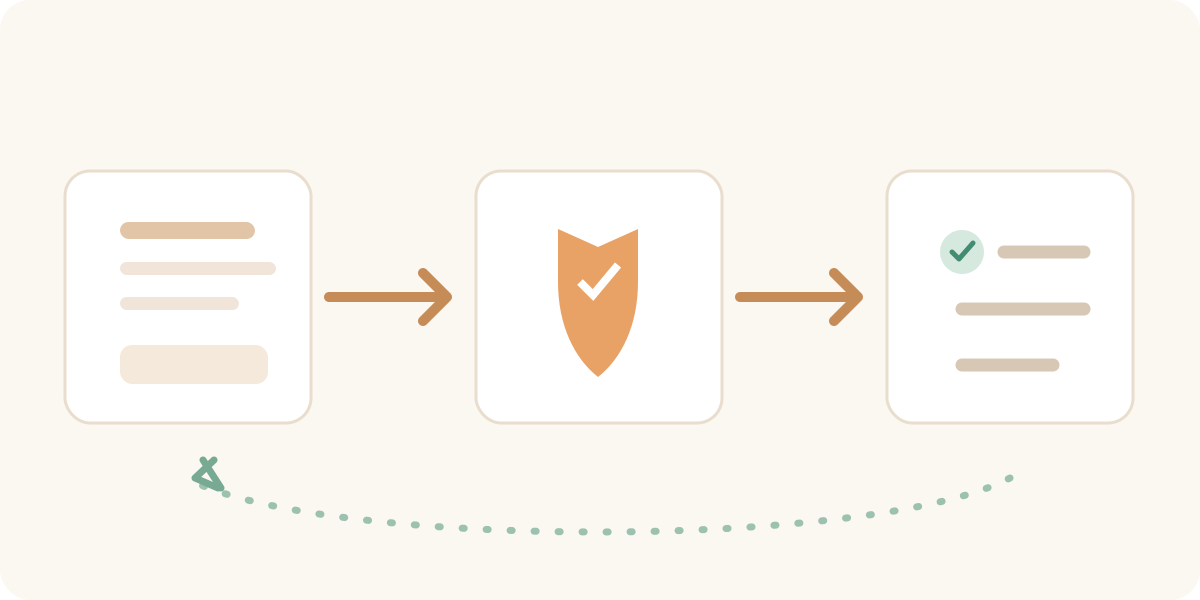
| Stage | Review question | Evidence to keep |
|---|---|---|
| Job criteria | Does each criterion map to a real responsibility? | Role rubric, reviewer notes, and approval history |
| Input data | Is the information accurate, current, and necessary? | Source, permission, retention period, and correction route |
| Model or score | Does performance change across relevant candidate groups or formats? | Evaluation results, sample sizes, limitations, and version |
| Human review | Can reviewers see evidence and disagree with the recommendation? | Reasons, overrides, escalation path, and audit trail |
| Candidate experience | Can applicants understand what is assessed and report an error? | Plain-language notice, accommodation path, and appeal contact |
A single overall accuracy figure can hide a consequential failure for a smaller group. Review false negatives and false positives separately, break results down where lawful and statistically responsible, and investigate small sample sizes rather than over-interpreting them. Include accessibility checks and unusual but valid career paths in the evaluation set.
Human review helps only when a person has the time, context, and authority to question the system. If staff see a score with no underlying evidence and are measured on speed, they may simply confirm it. Show the relevant evidence, record disagreements, and periodically inspect whether overrides uncover a recurring problem.
Keep jurisdiction and purpose in view
The U.S. EEOC explains that employment tests and selection procedures can create discrimination concerns when they disproportionately exclude protected groups; its guidance is specific to U.S. law. Employers elsewhere need to check their own legal duties. Across locations, the engineering lesson remains: document purpose, test outcomes, protect candidate data, and provide a meaningful way to correct an inaccurate record.
Sources and further reading
- International Labour Organization: AI in human resource management
- NIST AI Risk Management Framework Core
- U.S. EEOC: Employment tests and selection procedures
Specifications and prices can change. Check the linked pages before making a purchasing or deployment decision.